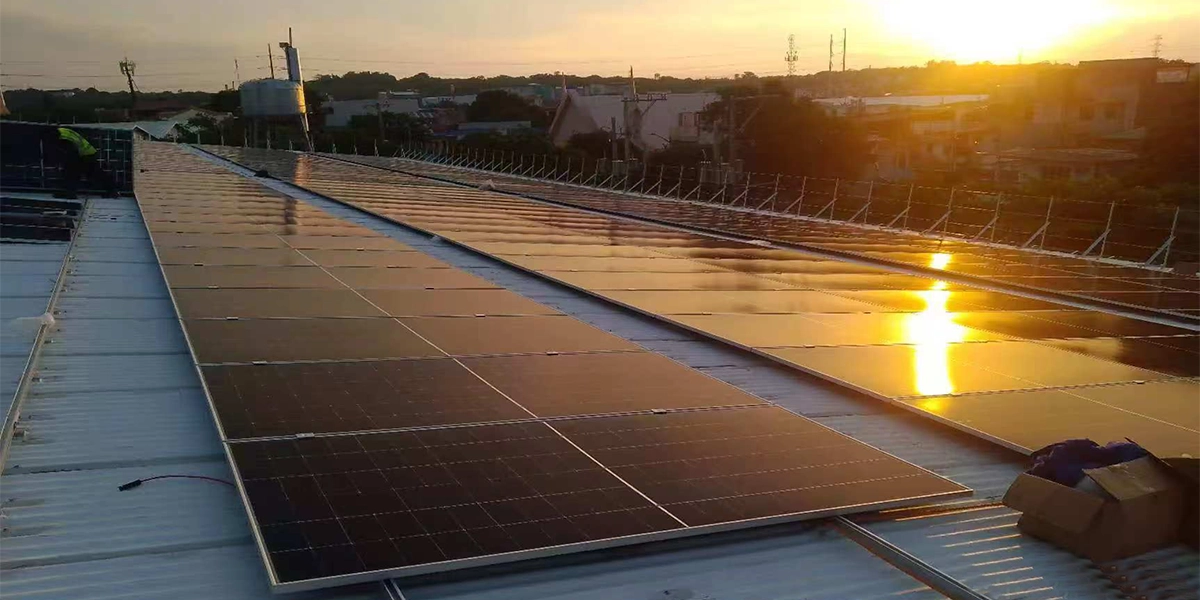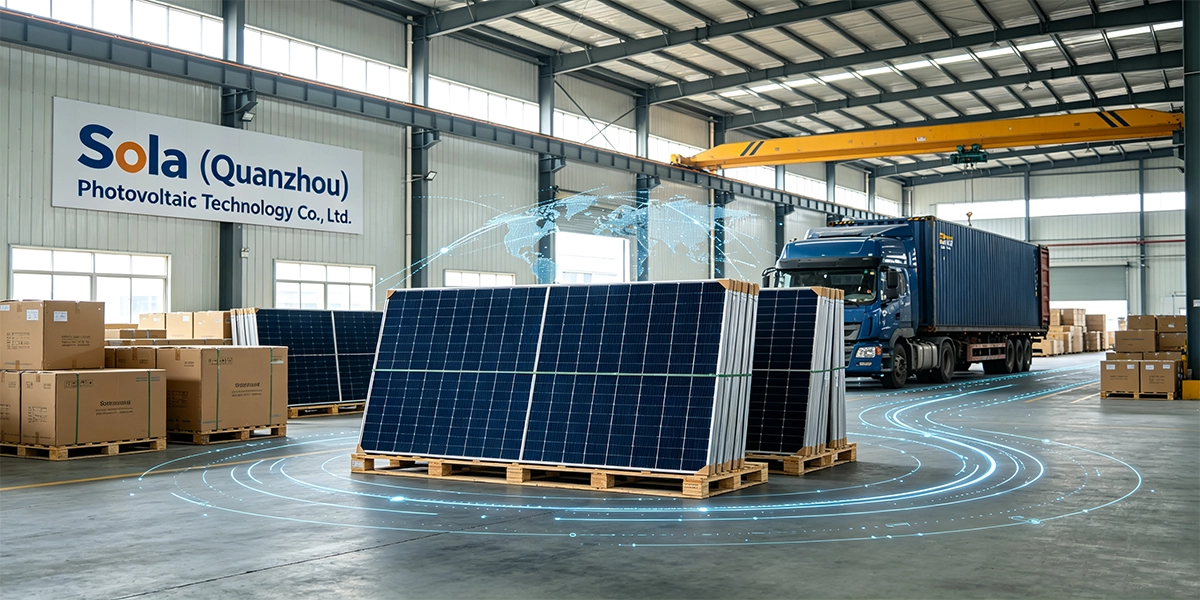
In the fast-growing global renewable energy industry, photovoltaic (PV) materials serve as the core foundation of solar power generation systems. From polysilicon, silicon wafers, and PV cells to specialized solar glass and advanced thin-film materials, Chinese photovoltaic materials have secured an unshakable leading position in the global market. Thanks to unparalleled advantages in industrial chains, technological innovation, cost performance, quality stability, and sustainable production, China’s PV material products have become the preferred choice for solar project developers, system integrators, and distributors worldwide.
This article explores the core advantages of Chinese photovoltaic materials, revealing why they continue to lead the global solar energy transformation and maintain strong market competitiveness in 2026 and beyond.
- Complete Global Industrial Chain & Unmatched Production Scale
The most prominent advantage of Chinese photovoltaic materials lies in its full-coverage and mature industrial chain, which no other country or region can replicate. China has built a closed-loop industrial system covering upstream raw material processing, midstream material manufacturing, and downstream module assembly and application.
According to the latest industry data, China’s production capacity accounts for over 93% of global polysilicon output, 96% of solar silicon wafers, more than 92% of PV cells, and over 86% of solar modules. This dominant market share fully reflects the scale strength of China’s PV material industry. Every core material required for solar power systems—including high-purity polysilicon, monocrystalline silicon wafers, ultra-white tempered PV glass, encapsulation films, and perovskite thin-film materials—can be independently developed and mass-produced in China.
A complete industrial chain effectively cuts intermediate transportation and cooperation costs, shortens product delivery cycles, and ensures sufficient global supply. Whether for large-scale utility solar farms, commercial rooftop PV systems, or residential household solar installations, Chinese photovoltaic materials can stably meet customized and bulk order demands worldwide.
- Leading Technological Innovation & Continuous Efficiency Breakthroughs
Technological iteration is the core driving force for the long-term competitiveness of Chinese photovoltaic materials. In recent years, Chinese scientific research institutions and leading PV enterprises have continuously broken global efficiency records, promoting the continuous upgrading of global solar power generation efficiency.
In traditional silicon-based PV materials, Chinese manufacturers have fully popularized high-efficiency N-type silicon wafer technology, significantly improving the photoelectric conversion rate and anti-attenuation performance of solar cells. In the emerging next-generation PV material track, China takes the lead in the commercialization research and development of perovskite and tandem solar cells. Chinese R&D teams have achieved a certified steady-state conversion efficiency of 28.04% for perovskite-organic tandem solar cells, setting a new world record. Leading enterprises have also realized a 34.85% conversion efficiency in perovskite-silicon tandem cells, opening a new era of high-efficiency solar power generation.
In addition, innovative materials such as CZTSSe thin-film solar materials independently developed in China use abundant earth elements as raw materials, featuring low costs, environmental friendliness, excellent thermal stability, and radiation resistance, showing huge application potential in ground photovoltaic power generation and space energy equipment. Meanwhile, China accounts for 65% of global solar technology patent applications, firmly leading the global PV material technological innovation trend.
- Superior Cost Performance & Stable Price Control
Cost performance is a key advantage that makes Chinese photovoltaic materials popular in the global market. Supported by large-scale industrial production, advanced automated production lines, and localized raw material supply chains, Chinese PV material manufacturers effectively reduce unit production costs while ensuring product quality.
Different from fragmented overseas production models, China’s integrated industrial layout realizes centralized processing, standardized production, and large-scale mass production, greatly reducing redundant production links and resource waste. This cost advantage is ultimately fed back to global customers, enabling global solar project investors to obtain high-quality PV materials at more competitive prices and effectively reduce the overall investment cost (LCOE) of solar power projects.
Moreover, thanks to independent control of the entire industrial chain, Chinese PV material prices have strong stability, avoiding violent price fluctuations caused by raw material shortages and supply chain disruptions. For global solar distributors and engineering contractors, this provides predictable cost budgets and stable profit spaces.
- Strict Quality Standards & Excellent Durability Performance
Many overseas users stereotype low-cost Chinese products, but modern Chinese photovoltaic materials represent high quality and high durability. At present, all mainstream Chinese PV materials strictly comply with international ISO quality systems, IEC safety standards, and EU CE certification, and pass global authoritative third-party testing.
Chinese monocrystalline silicon materials feature low defect rate, high purity, and weak light response performance, ensuring solar modules can maintain high power generation efficiency even in low-light, cloudy, and hazy environments. Optimized PV glass and encapsulation materials have ultra-high weather resistance, effectively resisting ultraviolet aging, high-temperature oxidation, wind and snow impact, and salt spray corrosion.
A large number of field application data shows that solar modules made of Chinese photovoltaic materials can maintain more than 90% of their initial power generation efficiency after 25–30 years of outdoor operation, fully meeting the long-term operation requirements of global photovoltaic projects. Excellent quality stability also greatly reduces the after-sales maintenance cost of solar systems for users.
- Green Low-Carbon Production & Sustainable Development Advantages
With the global emphasis on carbon neutrality and green trade, the low-carbon production advantage of Chinese photovoltaic materials has become a new core competitiveness. In recent years, China’s PV industry has comprehensively promoted green manufacturing, and most leading material enterprises have realized clean production with wind and solar power.
Compared with overseas PV material production that relies heavily on fossil energy, Chinese photovoltaic materials have lower carbon emissions in the whole production cycle from raw material smelting to finished product processing. In addition, emerging thin-film PV materials developed in China abandon rare and precious metal materials, adopt recyclable and environmentally friendly raw materials, and have higher resource utilization and lower environmental pollution.
This green production feature not only conforms to the global ESG development concept but also helps global customers meet local carbon tariff and green certification requirements, making Chinese PV materials more adaptable to the international green trade environment.
- Flexible Customization & Global After-Sales Service Capability
Chinese photovoltaic material manufacturers have strong flexible production capabilities, which can meet the diversified customized needs of global customers. Whether it is high-efficiency materials for special scenarios such as high altitude, high temperature, and coastal salt spray, lightweight flexible PV materials for wearable devices and building-integrated photovoltaics (BIPV), or ultra-large-size materials for large ground power stations, Chinese factories can complete targeted R&D and production.
At the same time, relying on global warehouse layouts, cross-border logistics systems, and professional overseas technical teams, Chinese PV material suppliers can provide fast delivery, on-site installation guidance, technical training, and after-sales maintenance services for global customers, solving the technical and service pain points of overseas users purchasing PV materials.
Final Thoughts
As the core cornerstone of the global new energy industry, Chinese photovoltaic materials have achieved comprehensive leadership in industrial scale, technological innovation, cost performance, product quality, and green production. Driven by continuous technological iteration and industrial upgrading, China’s PV material industry is constantly breaking efficiency limits and optimizing product systems.
For global solar investors, distributors, and engineering companies, choosing Chinese photovoltaic materials means choosing stable quality, competitive prices, cutting-edge technology, and reliable global services. In the future of global energy transition, Chinese PV materials will continue to empower the development of the global renewable energy industry and accelerate the world’s pace of achieving carbon neutrality.