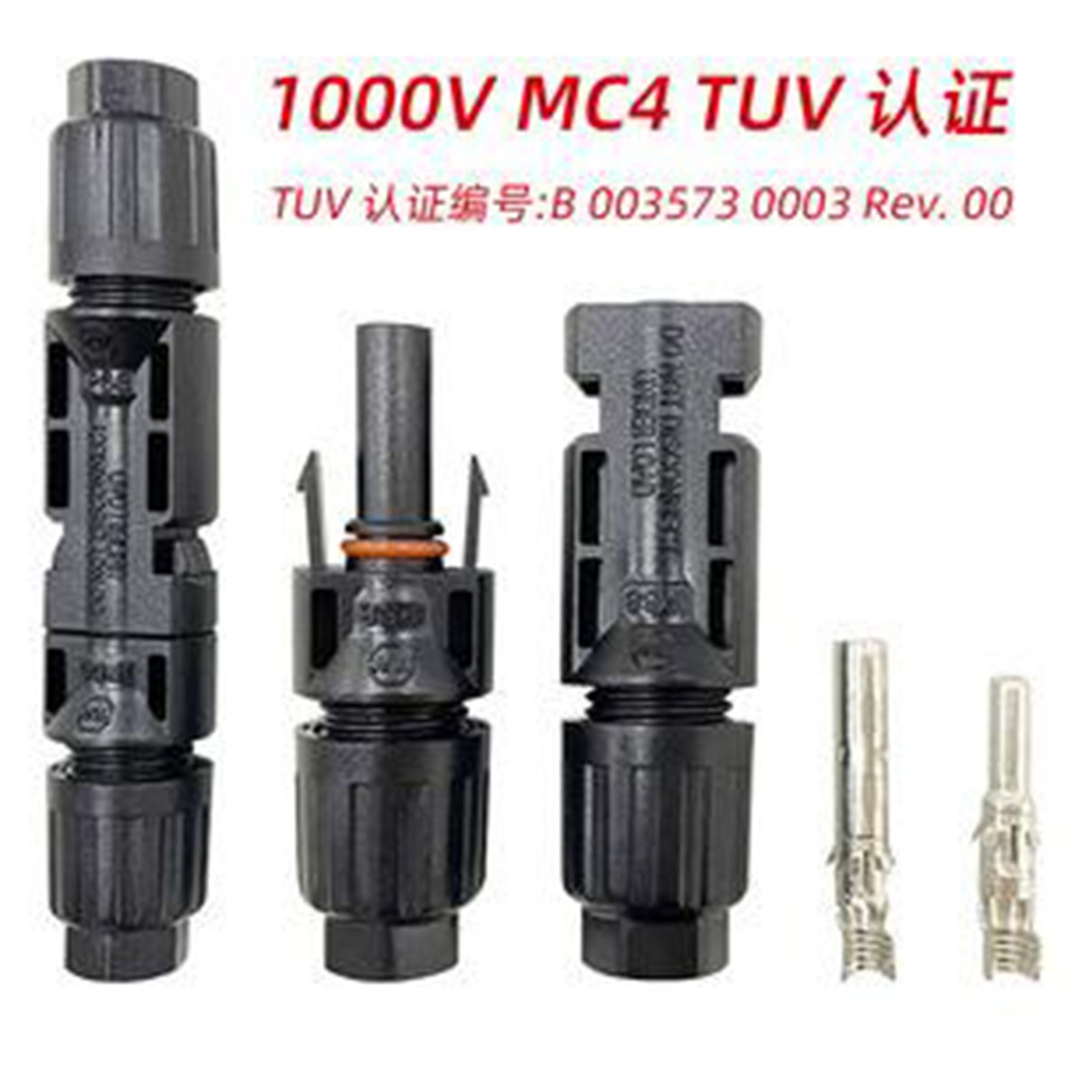
When solar investors and installers evaluate PV system safety, they often focus on solar panels, inverters, and battery storage systems. However, one underestimated component directly decides the long-term safety, stability, and lifespan of an entire solar power station: MC4 cable connectors.
As the core connection point for PV strings, MC4 connectors link solar modules, DC cables, combiner boxes, and inverters. Even minor defects in MC4 connectors can trigger DC arcing, overheating hotspots, power loss, and even solar fire hazards. Industry data shows that over 30% of solar system failures and safety accidents are caused by low-quality MC4 connectors and improper wiring connections, making them the most critical safety barrier for residential, commercial, and utility-scale solar power stations.
Why MC4 Connectors Are the Core Safety Component of PV Power Stations
Solar power stations operate outdoors for 25 to 30 years, enduring extreme environments including high temperatures, heavy rain, snow, UV radiation, and strong wind vibration. Unlike indoor electrical connectors, MC4 solar cable connectors must maintain stable insulation, low contact resistance, and waterproof performance under long-term harsh conditions.
- Prevent Dangerous DC Arc Faults and Solar Fires
The DC side voltage of PV systems can reach 600V to 1500V. Unlike AC arcs, DC electric arcs cannot self-extinguish once generated. Loose connections, mismatched pin sizes, poor crimping, or aging sealing rings in inferior MC4 connectors will increase circuit contact resistance rapidly.
Continuous high resistance generates extreme heat, forming hotspots on connector joints. This eventually ignites cable insulation and surrounding accessories, causing solar station fires. Many rooftop solar fire accidents traced by electrical inspection institutions stem from counterfeit or non-standard MC4 connectors rather than panel or inverter failures.
- Avoid System Power Attenuation and Long-Term Efficiency Loss
Unqualified MC4 connectors cause inconsistent current transmission between PV strings. Poor contact increases line loss, leads to unbalanced string current, and reduces the overall power generation efficiency of the solar array.
In medium and large-scale ground solar power stations, dozens or hundreds of mismatched MC4 connections will form cumulative energy loss. Year after year, the power generation gap becomes extremely significant, directly reducing the return on investment of the entire PV project. High-quality standard MC4 connectors maintain ultra-low and stable contact resistance, ensuring maximum power transmission without unnecessary energy waste.
- Resist Outdoor Environmental Aging and Long-Term Operational Risks
Genuine certified MC4 connectors adopt UV-resistant and high-temperature-resistant engineering plastic shells and professional IP67 waterproof and dustproof sealing design. This structure effectively blocks rainwater, dust, and humid air from entering the contact interior, preventing metal pin corrosion and short-circuit faults.
Low-cost shoddy MC4 connectors use inferior plastic and thin metal plating. After 2–3 years of outdoor exposure, the shell will crack, age, and deform, and internal pins will oxidize and rust. These hidden dangers do not appear in the early stage of operation but suddenly break down in the middle and late stages, bringing huge maintenance costs and safety risks to solar power stations.
- Standard Locking Structure Prevents Accidental Disconnection
Professional MC4 cable connectors are equipped with a one-way self-locking buckle structure. After correct plugging, they cannot fall off due to wind vibration, artificial touching, or cable stretching. Special tools are required for disassembly, which effectively avoids sudden circuit disconnection, system shutdown, and instantaneous voltage surge risks caused by loose interfaces.
Common Safety Hazards Caused by Low-Quality MC4 Connectors
Most solar safety risks are invisible in daily operation. Inferior MC4 connectors bring four major hidden dangers to solar power stations:
First, mismatched brand mixing. Many installers randomly match MC4 connectors of different brands to save costs. Different manufacturers have subtle differences in pin tolerance and locking structure, leading to incomplete contact and loose locking, which easily trigger overheating and arcing.
Second, unqualified crimping construction. Non-standard crimping tools and unprofessional operation make the connection between cables and MC4 pins loose, forming high-resistance nodes.
Third, lack of formal certification. Uncertified MC4 connectors fail to meet international electrical safety standards, with insufficient insulation performance and poor high-temperature resistance, unable to adapt to long-term PV system operation.
Fourth, aging failure in advance. Inferior materials cannot resist UV aging, resulting in shell brittleness, water ingress, and internal circuit failure in advance, shortening the overall service life of the solar power station.
How to Choose Safe and Reliable MC4 Cable Connectors for Solar Stations
To eliminate hidden safety dangers and ensure the long-term stable operation of solar power stations, installers and project owners must follow strict selection standards for MC4 connectors:
- Prioritize Fully Certified Standard MC4 Connectors
Select MC4 connectors with TUV, UL, and IEC international photovoltaic certifications. Certified products strictly comply with PV electrical safety standards in terms of material, contact resistance, waterproof grade, and high and low temperature resistance, avoiding safety risks caused by unqualified quality.
- Avoid Mixed Use of Different Brands
Try to support one brand and one specification for the whole solar station MC4 connection system. Matched male and female connectors ensure precise fitting, tight locking, and uniform contact resistance, fundamentally eliminating safety hazards caused by mismatched interfaces.
- Focus on Material and Process Quality
High-quality MC4 connectors use tin-plated copper pins with high conductivity and oxidation resistance, paired with high-strength UV-stabilized plastic shells and imported sealing rings. They can adapt to -40℃ to +85℃ extreme temperature environments and 25-year outdoor aging resistance.
- Standardize Installation and Crimping Process
Professional crimping tools and standardized construction processes ensure perfect combination of cables and MC4 connectors. Regular inspection of connector tightness and appearance aging during daily operation and maintenance can prevent potential faults in advance.
Final Verdict: MC4 Connectors Are the Safety Foundation of Solar Power Stations
A solar power station is only as safe as its weakest connection point. While high-end solar panels and inverters guarantee power generation performance, qualified and reliable MC4 cable connectors guarantee the operational safety of the entire PV system.
Ignoring MC4 connector quality to save short-term costs will lead to fire accidents, system shutdowns, power generation losses, and high maintenance costs in the future. For all residential rooftop solar, commercial industrial PV systems, and large utility-scale solar power plants, investing in standard, certified, and high-quality MC4 connectors is the most cost-effective safety strategy.
FAQ About MC4 Connector Solar Safety
Q1: Do all MC4 connectors have the same safety performance?
No. The appearance of MC4 connectors is universal, but materials, production processes, certifications, and contact resistance vary greatly. Inferior non-certified MC4 connectors are the main cause of solar station safety failures.
Q2: Can mixed-brand MC4 connectors cause fire risks?
Yes. Mismatched male and female MC4 connectors will cause poor contact, increased resistance, and overheating hotspots, easily triggering DC arcing and solar fires.
Q3: How long is the service life of standard MC4 connectors?
Genuine certified MC4 connectors support a 25+ year outdoor service life, matching the full lifecycle of solar power stations, while inferior products fail within 3–5 years.
Q4: Is IP67 waterproof necessary for solar MC4 connectors?
Absolutely necessary. IP67 waterproof and dustproof grade ensures that connectors can resist rainwater immersion and dust erosion in outdoor environments, avoiding short-circuit and corrosion faults.